

UPDATES
04/03/2026
Fostering participatory innovation: Inside the CELINE methodology
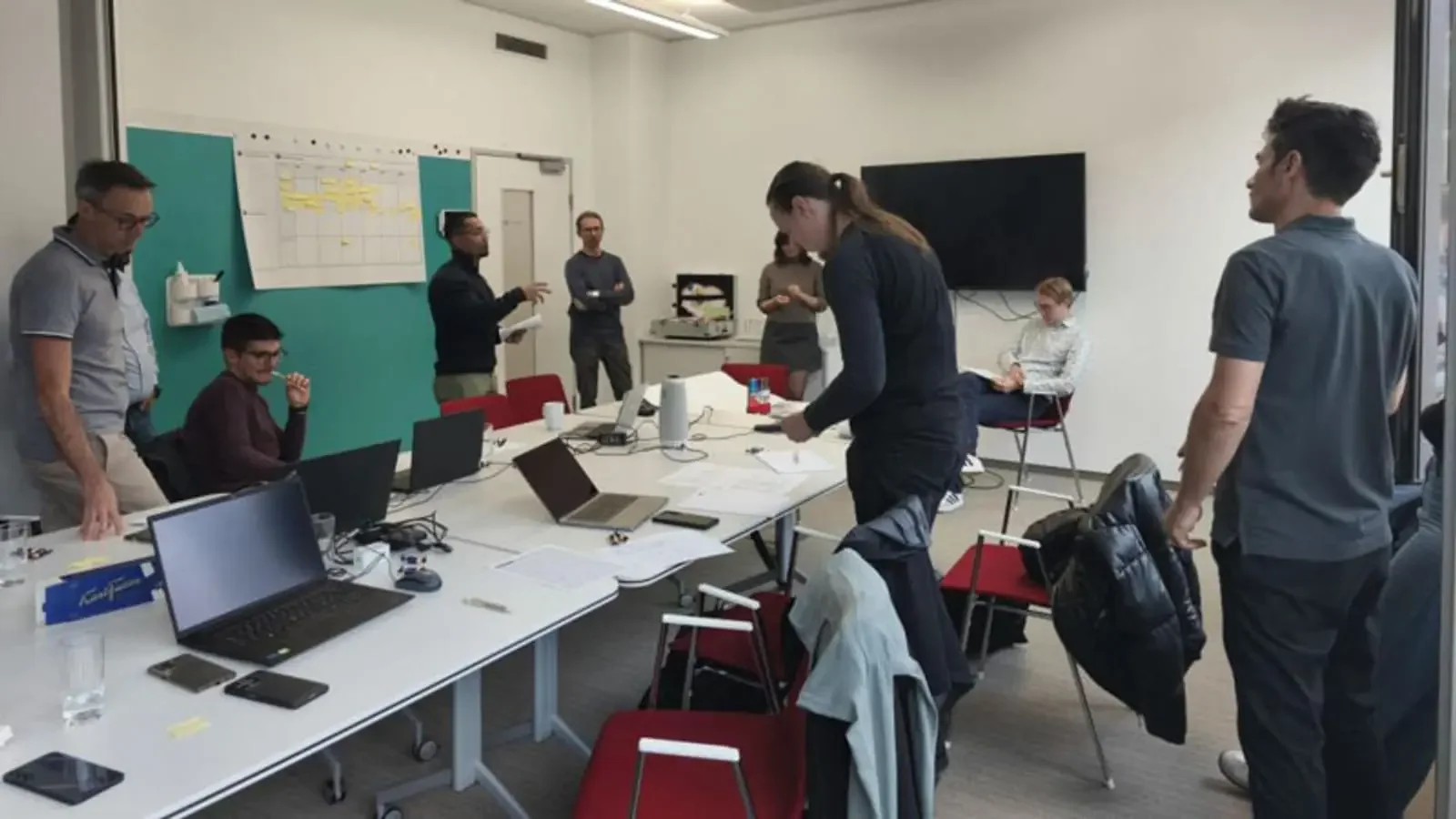
This interview with Tanvir Hasan explores how the European project CELINE uses energy living labs to promote participatory innovation across three demo sites.
(This article was originally published by Enlit on 2 March 2026)
Through co-creation, real-world testing and user empowerment, CELINE aims to develop accessible digital energy tools while addressing engagement challenges and ensuring long-term community-led impact.
At the heart of CELINE is a digital toolbox, a modular platform with three main functions:
Data management: Helping communities monitor and optimise their consumption.
Smart energy services: Allowing households and businesses to adapt to fluctuations and support the wider grid.
Community governance: Providing shared digital spaces for collective decision-making.
Three demo sites in Spain, Italy, and Finland are testing new ways for communities to engage with energy data, co-create the digital toolbox and shape their own pathways toward sustainable energy futures.
At each of these the toolbox is adapted to local needs by bringing citizens, municipalities, and experts together to test and refine solutions. This co-creation process ensures that digitalisation is not imposed but built with communities, keeping tools relevant and human-centred.
We spoke with Tanvir Hasan, project researcher from LUT University, on how the project’s methodology works in practice, what makes it distinct, and why end-user participation is central to its success. LUT University is a project partner of the CELINE project and leads the work package that focuses on empowering end-users.
A structured approach to participatory innovation
Can you give us an elevator speech about the methodology of CELINE? How does it differ from other projects on energy communities and digitalisation?
At the core is the CELINE energy living labs (C.ELLs). These act as real-world environments for continuous collaboration. They bring together diverse stakeholders to discuss, experiment, test new tools and ultimately build energy focused communities. These labs aren’t just testbeds for new digital solutions; they are participatory spaces where new energy services can be co-created, refined, and validated based on community needs.
What distinguishes our approach is its grounding in the living lab methodology, which rests on three core principles. Openness ensures transparent communication and ongoing stakeholder feedback. Empowerment places end-users at the centre of design through surveys or other forms of user research, and co-design sessions. And realism ensures that tools are tested directly in people’s real-world environments, making solutions both relevant and robust.
'Co-creation in practice
Many projects talk about end-user involvement. How does CELINE translate co-creation into concrete activities? Can you share an example from your research?
Our co-creation process is an ongoing cycle of engagement, design and validation. So far, we’ve conducted surveys with energy community members and managers to understand their energy and digital literacy. We have run a transnational workshop with demo leaders to compare local needs, and a vision workshop where stakeholders co-created potential solutions based on those insights.
The next major step is having end users test and validate those solutions.
I can share my experience from the survey we conducted in each demo. While demo sites 1 in Spain and 3 in Italy showed strong interest in learning about digital tools for energy savings, demo site 2 in Finland showed almost no interest. This wasn’t because the residents don’t care about energy – it reflects the fact that there is no established energy community there, and therefore participation in the survey was low.
Motivating community engagement
Engaging households and energy collectives can be challenging. What motivates or discourages end-users from participating in data-driven solutions? And how do you ensure trust and sustained involvement?
The Finnish demo site is a clear example of the challenges. Without an existing energy community, we’re engaging residents across nine buildings who are hard to reach due to privacy and access regulations. It creates a loop: we need workshops to motivate participation, but it’s difficult to convince people to join the workshops in the first place. To overcome this, we’re experimenting with different outreach approaches – advertising, using personal networks, and offering incentives.
To ensure the overall involvement of the community in CELINE, we are maintaining a detailed log of all contacts and their participation in different activities such as surveys and workshops. We will also develop specific schedules that outline whom to engage, for which activity (e.g. testing, validation), and when, ensuring a structured and purposeful approach to recruitment.
Designing tools for non-experts on energy
Your research focuses on designing tools for non-experts on energy. How does CELINE ensure digital tools remain accessible?
Survey data made one thing very clear: end-users overwhelmingly want simple, intuitive tools. To ensure this, our development team will prioritise usability. We will conduct workshops with end-users to facilitate onboarding, providing hands-on training to ensure they can use the tools effectively.
Also, the tools will be validated and tested by end users in their actual living environments. This crucial step provides direct feedback and creates iterative development opportunities to refine and improve the tools based on real-world usage.
Scaling participation beyond the pilots
What factors will determine whether CELINE’s tools can be sustained and scaled? And what role do communities play in long-term impact?
For long-term success, tools must be effective, user friendly, and aligned with local challenges in the respective energy communities. But ultimately, sustainability depends on continued user engagement. If end users don’t see clear value, no amount of technical excellence will ensure adoption.
Communities therefore play a central role – they are the ones who validate relevance, drive usage and advocate for broader uptake. Technology and business models matter, but community motivation is what will keep these tools alive beyond the pilot phase.
Conclusion
The CELINE project aims to demonstrate that digital energy innovation is most impactful when grounded in real contexts and shaped directly by the people who will use the digital toolbox.
Through its energy living labs, the project combines openness, user empowerment and real world testing to build solutions that are not merely technologically advanced, but meaningful, accessible, and rooted in community priorities.
As CELINE moves from design to testing, community engagement will remain the central ingredient determining which tools endure and which approaches can scale across Europe’s evolving energy landscape.
About the author
Nanna Moe is the Senior Communications and Events Manager with smartEN, a partner of the CELINE project. She has coordinated the preparation of this article, with revisions by Marion L’Epine, Anna Sylikou and Carmela Panico from smartEn and Anna Pruna Galdón from Ecoserveis.
TAGS: